Tuesday, November 24, 2020

Flumpkin פֿלאַבאַק

יאָ, אונדז'אָמער ליב פֿלאַן, און יאָ, אאונדז'אָמער ליב קאַראַמעל, און יאָ, אונדז'אָמער אָן־אַ־שיעור קאַבאַק, אָבער נישט דאָס בין איך אויסן. אויסן בין איך אַז ס'פֿעלט אונדז פֿלאַבאַק, און פֿלאַבאַק גײט זיך אַלײן נישט מאַכן. דער פֿלאַבאַק איז זײַדן־זיס און פּאַרפֿומירט נאָר מיט קאַבאַק און װאַניל. אויב עץ װיט'ץ צוגעבן צימערינג און אַנדערע געװירצן איז מהיכא־תּיתי, נאָר טו אַ פּרוװ װי ער שטײט און גײט. קאַבאַק האָט אַ טעם. זאָל לעבן קאַבאַק 


Yes, we love flan, and we love caramel, and yes we have lots of pumpkin, but that's not the point. The point is that the world needs flumpkin, and it isn't going to make itself. This flumpkin is satin sweet and perfumed only with pumpkin and a little vanilla. I will you to add some cinnamon and other spices if you really like, but try it as is. Pumpkin has a flavor. Let pumpkin be pumpkin.  

Flumpkin 

For the Caramel 

3/4 cups (150 g) sugar 

juice of one lemon 

Have ready two nine-inch pyrex pie pans or about eight individual ramekins. Place the sugar in a small saucepan and squeeze the lemon juice onto the sugar. Mix the juice with the sugar to the texture of wet sand. Place the pan over medium heat and allow the sugar to melt without stirring until caramel-colored, about five minutes. Refraining from stirring is the only hard part of this recipe. When the caramel is melted and close to the desired color lift the pot off the heat and yes, now you may give it a swirl, but only a swirl. Quickly pour the hot caramel into the pans or ramekins. Place the pans or ramekins in a larger baking dish.

For the Flumpkin 

1 cup milk 

1 cup cream 

2/3 cup (6 ounces) cooked mashed or pureed pumpkin or squash 

3/4 cups sugar 

2 teaspoons vanilla 

5 eggs 

Warm the oven to 325 F. Bring a kettle of water to the boil. Combine the milk, cream, pumpkin, and sugar in a sauce pan and bring to a simmer, whisking together. Remove from heat and add vanilla.  whisk the eggs in a largish bowl.  When the cream has cooled slightly, whisk it into the eggs. Strain and pour onto the caramel-coated pans. Place the baking pan containing the flan-pans in the oven and pour the hot water into the larger pan so the flumpkin bakes in a hot bath. Bake for about one hour.It will still seem a little jiggly when you take it out.

Remove the Flumpkin from the oven and allow to cool or chill. Unmold onto a flat plate.


 מהיכא־תּיתי If you wish

 װי ער שטײט און גײט as is

Yiddish pumpkin vocabulary is here

Labels: , , ,

Monday, December 02, 2019

Vegan Hamburger Buns for Adam Schiff


This year I made no pies, no cornbread, no beans, no pumpkins.  I spent the entire holiday making batch after batch of buns for a project to be announced shortly.

The impulse to develop this recipe began with  a podcast I heard on which Adam Schiff noted that while vegan burgers have become much more widely available, the vegan bun remains an elusive desideratum.

I can think about a few possible reasons for this.  Two conflicting qualities make a sandwich bun optimal.  The ideal sandwich delivery system is sufficiently soft and fluffy that it does not interfere with or distract from the sandwich contents, but strong enough to contain any juices without disintegrating.  A dough with eggs and milk or milk powder can provide a fine dense crumb to fill these requirements, but adding mashed potatoes to the dough can do the same thing.  This recipe is inspired by the potato bread in The Greens Cookbook by Deborah Madison.  I added some sweet potato just for some golden eggy color, but serendipitously, the sweet potato dough turned out softer and fluffier than any other batch.  This is also a recipe which works best with all-purpose flour.


Vegan Buns

1 medium-large russet potato, about 6-7 ounces
2 ounces sweet potato

2 pounds all-purpose flour (about 7-8 cups)

1 cup water (use water from cooking the potatoes, plus enough added to make one cup)
1 cup unsweetened soy milk
1 1/2 packets yeast (1 tablespoon, 3/8 ounce)

3 tablespoons sunflower oil
2 tablespoons date syrup, malt, or sugar
1 tablespoon salt

1/2 cup water
1 teaspoon cornstarch
sesame seeds
Coarse grain sea salt (optional)

Peel the potatoes and cut into 1-inch dice.  Put them in a small saucepan and add water to cover and 3/4 teaspoons salt.  Bring to the boil and simmer until quite tender. Strain and reserve the water.

Measure reserved potato water and if necessary, add enough water to make one cup.  If the water has become cool, reheat it.  Combine the water and soy milk in a mixing bowl.  The mixture should be warm.  Sprinkle yeast over the surface and add half the flour.  Mix with the paddle.  Leave the spongy dough in the mixing bowl to rise for 45 minutes.

Mix the dough once more with the paddle.  Remove the paddle and add the potatoes, syrup, oil,  salt, and remaining flour.  Knead with the dough hook for four or five minutes.  This dough can also be kneaded by hand.  The dough will be somewhat softer and stickier than typical bread dough, but worry not.

Turn the dough into an oiled bowl and allow to rise for another 45 minutes.  Punch it down, separate challah, and divide the remaining dough into twenty pieces for large buns or 40 for slider buns. Roll the dough bits into round balls and arrange them on parchment-lined sheet pans.  Press each roll to flatten into bun shapes.  Cover and and allow to rise another 45 minutes.

Heat the oven to 350F (Mark 4)

Bring 1/2 cup water to the boil.  In a small cup or bowl, dissolve 1 teaspoon cornstarch in 1 teaspoon cold water.  Add the cornstarch slurry to the boiling water and cook until clear.  Brush the tops of the risen buns with cornstarch, and sprinkle with sesame seeds and coarse salt. Bake the buns for 25 minutes, rotating the pans after 15 minutes.

ETA: Use this dough to make vegan Challah!

Weave your vegan challah dough to make a crown, a challahsaurus, challah turtles, or just these beauties.


Labels: ,

Tuesday, March 19, 2019

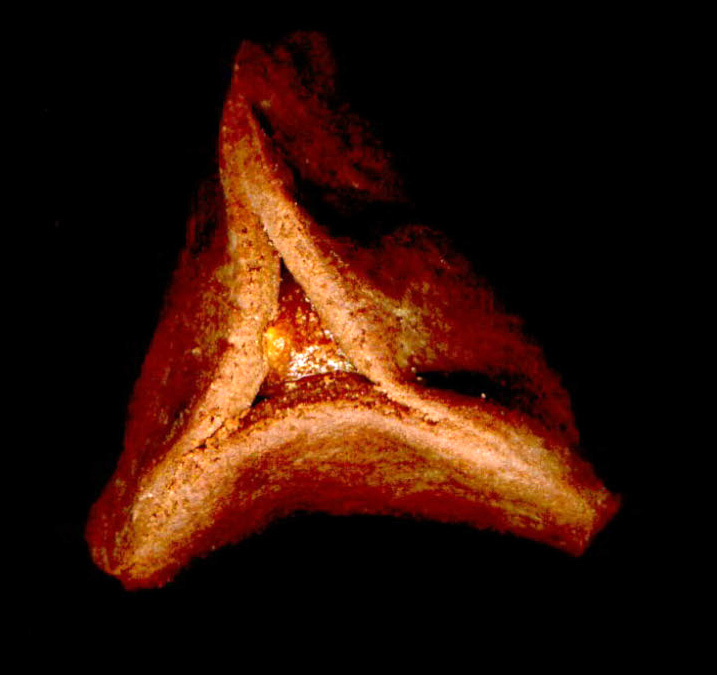
Inside-Out Carrot Cake Hamentashn with Cream Cheese Filling


A few years ago I made this carrot jam filling for hamentashn.  It was not carrot cakes, nor carrot halwa, nor carrot pies (a venerable and beloved dessert before English cookery encountered the pumpkin and everything changed forever), nor even the carrot ice cream that Marya Dmitrievna thought was laughably implausible that inspired me.  It was those carrot-shaped bags.  As soon as I saw them I just had to fill them with some kind of carrot-based shalekhmones.  The compulsion was no more resistible than fate itself.

This made me think of A Girl of the Limberlost. Our heroine, Elnora, has a troubled relationship with her mother, who is unkind and sometimes abusive because she believes Elnora to be responsible for her father's death.  But, when Elnora (Mrs. Comstock was too conservative even to allow her poor daughter her fair share of vowels) gets a special lunch box from her uncle, Mrs Comstock is swept up in a frenzy of baking and cooking to make a lunch that will live up to the box in which it will be transported.  The moment when Elnora unpacks her lunch is unforgettable:

Mrs. Comstock was up early, and without a word handed Elnora the case as she left the next morning.
“Thank you, mother,” said Elnora, and went on her way.
She walked down the road looking straight ahead until she came to the corner, where she usually entered the swamp. She paused, glanced that way and smiled. Then she turned and looked back. There was no one coming in any direction. She followed the road until well around the corner, then she stopped and sat on a grassy spot, laid her books beside her and opened the lunch box. Last night's odours had in a measure prepared her for what she would see, but not quite. She scarcely could believe her senses. Half the bread compartment was filled with dainty sandwiches of bread and butter sprinkled with the yolk of egg and the remainder with three large slices of the most fragrant spice cake imaginable. The meat dish contained shaved cold ham, of which she knew the quality, the salad was tomatoes and celery, and the cup held preserved pear, clear as amber. There was milk in the bottle, two tissue-wrapped cucumber pickles in the folding drinking-cup, and a fresh napkin in the ring. No lunch was ever daintier or more palatable; of that Elnora was perfectly sure. And her mother had prepared it for her! “She does love me!” cried the happy girl. “Sure as you're born she loves me; only she hasn't found it out yet!”


And Mrs C. continues to come up with brilliant, multi-course lunches every day, and adds more to share:

Elnora went down the road thinking of the city of children with whom she probably would divide.Of course the bridge would be occupied again. So she stopped and opened the box. Undoubtedly Mrs. Comstock was showing Margaret Sinton the "frills." The cake was still fresh, and there were four slices.  The sandwiches had to be tasted twice before Elnora discovered the beechnuts had been used in a peanut recipe, and they were a great improvement. There were preserved strawberries in the cup, potato salad with mint and cucmber in the dish, and a beautifully browned squab from the stable loft.


Beechnut butter!  And that potato cucumber salad with mint would not be out of place at a hipster gastropub in Bushwick.  Who knew 19th century Indiana was so cool?

Of course we identify with hungry neglected children finding food and kindness after long deprivation.  We fell for this hook in Harry Potter, Sara Crewe, Oliver Twist, and I don't know how many others, but this time I can see things from Mrs. Comstock's point of view as well.  That multi-compartmental lunch box is an articulated womb, a challenge you can't decline.

Having made carrot filling, I wanted to try turning the hamentashn inside-out (as one does with pumpkin hamentashn to make inside-out pumpkin hamentashn). Carrot dough suggested cream cheese filling.  I added some farmers' cheese and a yolk to make the filling less melty.

Carrot Cake Dough for Hamentashn

20 ounces (about 5 cups) whole wheat pastry flour (best with part whole wheat and part all-purpose)
1 cup brown sugar
1 teaspoon baking powder
1/2 teaspoon salt
1 teaspoon cinnamon
1/4 teaspoon cloves
1/4 teaspoon allspice
1/4 teaspoon mace
1/2 teaspoon ginger
12 ounces (3 sticks) butter
1 egg
1 cup orange juice
2 or 3 medium carrots, finely shredded, about 6-8 ounces
To make the dough rollable, cutable, and foldable, you will need to grate the carrots very fine.

Mix the dry ingredients together and blend in the butter.  Add the juice, egg, and vanilla to form a dough.  Mix in the shredded carrots and allow the dough to rest in the refrigerator overnight.

Cream Cheese Filling for Hamentashn

8 ounces (1 package) cream cheese
4 ounces farmer cheese
2 ounces (1/2 stick) butter
6 1/2 ounces (1 1/2 cups) confectioners' sugar
1 yolk
(probably good to add one slice white bread, crusts removed, soaked in milk and squeezed out)

Blend everything together in a mixer or processor.  It might be a nice touch to push the farmer cheese through a sieve, but I will not insist.

Heat the oven to 350F
Line sheet pans with parchment.

Working in small batches so that it stays cool, roll the carrot dough to 3/16 inch thick (slightly thicker than usual) and cut into circles.  I recommend cutting larger than usual circles because the carrot shreds will offer some resistance.  Fill with cream cheese filling (do not overfill), and bake for 20-25 minutes or until fragrant and golden brown on the bottom.

More Purim links:

Yeast Dough for Hamentashn 

Orange Juice Dough for Hamentashn

Inside-Out Pumpkin Hamentashn (Pumpkin Seed Pastry with Pumpkin Filling


Pumpkin Hamentashn (with Pumpkin Seed Filling)


Carrot Filling 


Apricot Filling


Poppy Seed Filling


White Poppy Seed Filling


Hemp Seed Filling


Povidl (Prune Filling)

פּאָװידלע Prune Filling (Yiddish)

Chocolate Dough (English)
 

Vegan Gluten-Free Hamentash Dough
 (English)

Vegan Gluten-Free Hamentash Dough
 (Yiddish) װעגאַן טײג

Chocolate Dough (Yiddish)


Hamentashn, hamentaschen, homentashen, homentashn, המנטאַשן

Labels: , , ,

Friday, January 20, 2017

Bukovina Buckwheat Cornbread


A few years ago I posted this dialog-poem by Yekhiel Shraibman about language, memory, and an intriguing recipe for  corn and buckwheat shortbread cookies.  I needed some buckwheat quick bread to make the topping for the Yiddish Mormon Funeral Potatoes I hope to be making today, so I adapted the recipe, adding milk, yogurt, whole eggs and leavening to the corn and buckwheat mixture

Bukovina Buckwheat Cornbread
4 ounces butter
6 ounces (1 1/2 cups) buckwheat flour
6 ounces (1 1/2 cups) fine yellow cornmeal
1 1/2 teaspoons salt
2 tablespoons honey (more or less, to taste)
1/2 teaspoon baking soda
1 tablespoon baking powder
1/2 cup yogurt
1 cup milk
2 eggs

Heat the oven to 425F. Melt the butter in a nine-inch cast iron skillet or two smaller skillets.
combine the dry ingredients in a large bowl, and make a hole in the center.  Beat the eggs with the milk, yogurt and honey, and pour into the center of the mix. Fold gently to make a batter. Pour on the hot butter and stir to combine.  Pour immediately into the hot skillets and bake for 15 minutes.  Lower the heat to 375, and bake another 10 minutes or until a skewer inserted into the center comes out clean.

At this point I can tell you this bread is wonderful hot out of the oven with butter.  When I was putting this bread together, I was almost tempted to add some white flour, because I was nervous about working with buckwheat flour, with which I have limited experience.  I am glad I resisted.  This wheat-free, gluten-free bread is soft, light, and pleasantly crumbly, just as I hoped.

Don't miss

Coconut Cornbread
Vegan Gluten-Free Coconut Cornbread
Cornbread Stuffing or Dressing

Labels: , , ,

Thursday, September 20, 2012

‏ ‏ Crown Challah (Khale) קרױן־חלה

די חלה האָב איך געמאַכט פֿאַר ראש־השנה. דעם קרױן האָב איך געפֿלאָכטן פֿון פֿיר שלענגלעך, און דאָס ברעגל פֿון צװײ שלענגלעך. דער רעצעפּט פֿאַר באַניע־טײג געפֿינט זיך דאָ, און דאָ איז סתּם אַ חלה טײג. ‏
‏אַ זיס געבענטשט יאָר אַלע אין מױל אַרײַן ‏


Here's a khale I made for Rosheshone.  The crown is woven from four strands in a sort of square spiral, and the brim from two strands twisted together.  The recipe for Pumpkin khale is here (in Yiddish, with braiding directions, here), and  a plain khale dough (with Challahsaurus directions) is here.  A sweet and blessed year to you.

Labels: ,

Monday, March 28, 2011

Buns

I am beside myself about these delicious buns. I followed Marion Cunningham's recipe from The Fannie Farmer Baking Book, but instead of making sixteen large buns, I made twelve large buns and nine little bunelekh for vegetarian sliders (sliders are tiny little hamburgers. We love tiny food). I want to endorse this recipe, which yields up a nicely soft yet densely-crumbed bun that will act as an ideal delivery system for the vegetable burger and condiments of your choice, but I must own that it is milkhik as the day is long, and buns are a particularly problematic category since they are not just a bread that might be eaten with meat, but a bread whose entire reason for existence is to be eaten with meat, so really, I have no idea what to tell you. I will just be making sure that none leave the premises unconsumed.

I have also just made my first batch of homemade seitan, about which more later (yes, I am using up lots of flour). I am hoping to be able to make some kind of burger-like entity with the seitan. Has anyone done this?

Labels:

Tuesday, March 23, 2010

Something Out of Nothing IV: Bottom of the Bag Brown Bread


Every year at about this time I will make up a batch of something to empty out whatever peysekh-hostile flours are still infesting in the pantry, and every year this turns out to be more wonderful than even I would have guessed. Have a look at Bottom of the Bag Pancakes, Bottom of the Bag Muffins and Bottom of the Bag Cookies from previous years, and Lindy’s Something out of Nothing roundup.

Somehow this year has just flown through my fingers and I find myself with lots more flour than usual at a much later date, so a big bread seemed to be just the thing.


Bottom of the Bag Brown Bread

1 pound (3 1/3 cups) all-purpose flour (yes, I reall had exactly one pound left!)

12 ounces (2 1/2 cups) chapatti flour

10 ounces (1 cup) semolina

10 ounces (2 ½ cups) whole wheat pastry flour

½ ounce (2 tablespoons) rolled oats (why did I have this? I have no idea)

¼ cup peanut oil

6 ounces ( ¾ cup or 1 ½ sticks) butter, melted

¼ cup coconut oil

2 ½ tablespoons dry yeast

3 tablespoons salt

¼ cup agave

1 cup yogurt

2 1/3 cups cooked rye berries (1 cup rye berries cooked in liberally salted water for about an hour)

one egg for eggwash (optional)

sesame, poppy, caraway and/or coarse salt (optional)


Combine the flours and oats in a large mixing bowl. Mix in the melted butter and oils and mix to combine. Dissolve the yeast in a cup and a half of warm water. Add salt, agave, and yogurt, and mix into the flours to form a soft sticky dough. Knead for about ten minutes by hand or in a mixer, and then knead in the rye berries by hand.

Leave the dough to rise covered in a lightly oiled bowl for about an hour. Punch down and allow to rise a second time:

(wow this thing rose like the dough that ate Cincinnati)! Wish I had taken a before picture for y’all).


Heat the oven to 375. Punch the dough down again and divide into five or six loaves. Place the loaves on parchment-lined baking sheets and proof for about twenty minutes.

If desired, beat an egg with a teaspoon of water to make an eggwash and brush the surfaces of the loaves. For extra shine, allow the wash to dry and brush on a second coat. Sprinkle with seeds and coarse salt if you wish. Bake for forty minutes, rotating the pans top to bottom and front to back after thirty. The finished loaves should be a gorgeous golden brown and provide that satisfying hollow thump when you tap them on the bottom (my favorite moment in bread baking).


Since this bread is milkhik, I should have made it into some special shape to warn folks of the dairy products lurking within. Maybe little skulls with crossbones, something like that.


There is so much butter in here that it is fine as is, or װי עס שטײט און גײט vi es shteyt un geyt (as it stands and walks), but if you want to slather on yet more butter I have no argument with you whatsoever.


Tremble before me leavened grain; I am the fearsome khumets-bane!

Labels:

Thursday, October 08, 2009

Chocolate Honey Cake שאָקאָלאַדער לעקעך

Chocolate lekekh. Since we were celebrating a birthday on yontif, mimetic candles are made of baby carrots and sour cherries, both from Stoneledge Farm

The honeycake recipe that I have been making for the last decade has some chocolate as a seasoning, but it is not really a chocolate cake. Here at last is the deeply chocolate honey cake you have all been waiting for. כּי לקח טובֿ נתתּי לכם

Chocolate Honey Cake

Preheat oven to 400F. Prepare several cake or loaf pans.

Melt over simmering water

6 ounces unsweetened chocolate, chopped

Sift dry ingredients together:

24 ounces (6 cups) all-purpose flour (You may use part or all whole wheat pastry flour)

1 scant tablespoon ginger

2 teaspoons cinnamon

2 teaspoons allspice

2 tablespoons baking powder

1 teaspoon baking soda

½ cup cocoa

2 teaspoons kosher salt

Blend together in processor or blender:

8 ounces (1 cup) pitted prunes

1/2 cup ginger preserves

In a mixer combine:

2 tablespoons instant coffee

1 cup boiling water

1 pound (about 2 scant cups) bamboo honey

1 ½ cups butter (3 sticks, 12 ounces), or coconut oil, or vegetable oil

2 cups dark brown sugar (1 pound)

2 teaspoons vanilla

4 tablespoons slivovitz

6 extra-large or jumbo eggs (added at last minute)

Combine the prune-ginger-mix into the coffee-butter mix and stir in the melted unsweetened chocolate. Gently fold the coffee-ginger-chocolate into the dry ingredients.

Then fold in:

4 grated pears (about 12 ounces pear pulp and juice)

8 ounces semisweet chocolate, chopped, or chips

Pour and scrape the batter into prepared loaf-pans and/or cake pans. Bake 15 minutes at 400, 15 minutes at 375, and 15 minutes at 350. The cakes are done when a tester comes out clean and they offer mild resistance to a touch.

This recipe yielded one large loaf cake, and eight small (8-inch) loaf cakes. I guess you could make half the amount, but the cakes stay good for two weeks, and in fact get better every day.

Labels: ,

Wednesday, September 16, 2009

LIttle Chocolate Chip French Fries

I have no pictures for you, because these cookies disappeared almost instantly. A week of frenzied baking had yielded some scraps of whole wheat piecrust pastry and biscuit dough, so I mixed them with an egg, brown sugar and chocolate chips to make a few dozen ad-hoc cookies.

The Wee'an, into whom most of the cookies vanished, had this trenchant observation:

They are almost like little chocolate chip French fries in the way they make you feel.

Makes life worth living, that does.

Ad-Hoc Chocolate Chip Cookies

Dough scraps from pie, tarts, cobbler, biscuits, scones, slump, pan-dowdy, or whatever else you have been baking (about 4 ounces, but really just use up whatever you have)
1 egg
1/2 cup (or so) dark brown sugar
1/2 cup (or so) flour
1/2 teaspoon baking powder
chocolate chips or chopped semisweet chocolate

Crumble the doughs together with your fingers. Use a pastry blender to mix in the sugar and egg. Add enough flour to make a cookie dough-like consistency. Blend in the chocolate chips and chill for an hour or longer.
heat the oven to 375. Form the dough into cherry-sized balls and arrange them on parchment lined baking pans. Bake for 20 minutes, switching the trays front to back and top to bottom halfway through.

Labels: ,

Thursday, May 28, 2009

The Chocolate Lady’s Vegan Shvies (Shabuoth, Shavuot) Survival Guide (Honey Vanilla Kernik)


-->

The difficulties faced by vegetarians during the joyous festival of peysekh are the subject of endless brow-furrowing, hand-wringing, and beard-tugging, but really, a vegetarian Passover is a day at the races, a veritable (peysekhdik) cakewalk compared to steep and slippery slope scaled by vegans at the joyous Feast of Weeks. Yes, I know peysekh is way longer, and comes with actual mitsves, but everyone is more or less in the same boat with regard to facing culinary challenges at peysekhtime. Shvies, on the other hand, has no dietary restrictions, and on the contrary offers the extra option of having milkhiks at a holiday meal. This beloved shvies tradition is of recent origin, dubious provenance, and is by no means universal, but it has earned shvies the title as the best of all holidays.

Here are your shvies survival links:
The most important recipe you need is this cashew and hemp cheese for filling blitnses, pierogi, vereniki, naleszniki, and other cheesy delights.
Have a look as well at this amazing pistachio cheesecake (or Yiddish pistachio cheesecake)

And here is the honey-vanilla kernik you have been waiting for.
A sweet and happy yontif to all In Mol Araan.

װעגאַנער טאָרט מיט קאַשוניס און קאָנאָפּליעס
1 טעפּל קאַשוניס
½ טעפּל קאָנאָפּליעס
‏2 לעפֿל קאָקאָנוס בױמל ‏
¼ לעפֿעלע זאַלץ
¼-1/2 טעפּל האָניק
זױמען פֿון 1 שױט װאַניל
2 לעפֿל אַגאַר (קאַנטען)
װײקט אײַן די קאַשוניס און קאָנאָפּליעס אין װאַסער אײן נאַכט. גיסט אױס דאָס װאַסער. מאָלט אָפּ די ניס מיט 1 ½ טעפּלעך פֿרישע װאַסער, האָניק, זאַלץ און װאַניל. קאָכט דאָס געמיש אין אַ טאָפּ מיטן אַגאַר דער אַגאַר זאָל צעגײן. גיסט אײַן אין אַ טאָרט־פֿענדל פֿון 6 צאָל און קילט עס אָפּ.

Almost Raw Vegan Honey Vanilla Cheesecake (Kernik)

1 cup raw cashews
½ cup hemp seeds
2 tablespoons coconut oil
¼ teaspoon salt (2 fat pinches)
2 tablespoons agar-agar (kanten)
¼-½ cup bamboo honey or other flavorful honey, to taste
seeds from one vanilla bean
1 6-inch pastry crust (ah, look! You have a leftover chocolate crust right here!)
Soak the cashews and hemp seeds overnight. Drain them and add 1 ½ cups fresh water, the honey, oil, and salt, and blend at high speed for several minutes. Heat the blended nut mixture with agar until the agar dissolves and pour into a six-inch springform with or without a prepared crust. You can pour the mixture into individual cups or bowls.

Labels: , , ,

Sunday, May 24, 2009

Almost Raw Pistachio Vegan Cheesecake

Left to right: raw pistachios, soaked pistachios, decorticated pistachios

This delicious pale green dessert was my second attempt at a vegan cheesecake, and it is really much easier than I imagined. The only difficult part of this recipe is decorticating all the pistachios, but if you have company, the work flies by. I used agar agar or kanten to set the uncooked nut mixture, so this is more of a Bavarian cream than a cheesecake. Agar is a kosher vegetarian gelling agent. The Yiddish word for agar is אַגאַר.
The pistachio flavor is intense (it is almost nothing but nuts) and you just want to fall right into that calming soft green color. A Yiddish version of this recipe and a picture of the finished cake are here.

Chocolate Shortbread Crust

2 cups flour
1 cup confectioners' sugar
1/2 cup cocoa powder
pinch salt
1 cup (8 ounces) coconut oil

Line the bottoms of 3 six-inch springform pans with baking parchment and oil the parchment. preheat the oven to 325.
Combine the flour, sugar, cocoa and salt in the bowl of a processor and pulse to mix. Add the coconut oil and pulse until it forms a dough. Divide the dough into three parts and press into the bottoms of the prepared pans. Chill for 20 minutes or longer, and bake for 25 minutes at 325. This recipe will also make about 50 little shortbread cookies.

-->
Pistachio Cheesecake (Kernik) or Crème Bavaroise

2 cups pistachios
1 cup almonds
3/4 cup honey
1/2 teaspoon salt
1/4 cup coconut oil
4 tablespoons agar (kanten) flakes (I used Mitoku)

Soak the almonds and pistachios overnight. Decorticate the nuts. You can remove the almond skins fairly easily by squeezing them and popping the kernels right out. The pistachios might require a little more in the way of persuasion to part with their cortices, but look at how gorgeously green those decorticated kernels are!
Combine the decorticated nuts with honey, salt, coconut oil, and two cups of fresh water in a blender and blend on the highest speed for several minutes to make the puree as satiny as possible. Pour and scrape the nut miuxture into a saucepan and heat with the agar flakes until the dissolve. Pour the filling into two of the prepared crusts, or into individual dessrt glasses and chill.

This recipe appears in Yiddish here.

דער רעצעפּט געפֿינט זיך אױף ייִדיש דאָ ‏


Yes, I know you still have one unfilled crust. Watch this space!

Labels: , ,

Sunday, April 12, 2009

Uppåkra (Swedish Potato Cookies for Passover)


I was loving these delicious butter cookies (do not click during peysekh!), and they already have lots of potato starch to begin with, so it seemed like a good idea to try a kosher-for-Passover version. For my first try at adapting the recipe I substituted half a cup of cake meal for the cup of flour (cake meal is quite a bit denser than flour), and increased the potato starch by a two tablespoons. Next time I might try adding another two tablespoons of cake meal for a firmer dough. There is really no kosher-for-Passover vanilla extract fabulous enough for these cookies, so I left that out and added the zest of an orange and a lemon, and this worked very nicely. Maybe I start some some homemade vanilla extract now, it will be ready for next year.

The peysekhdik uppåkra came out pleasantly crisp and very crumbly. You won’t believe it’s not chametz.

.

Passover Uppåkra (Swedish Butter Cookies)


8 ounces (2 sticks, 1 cup) butter, softened

1/2 teaspoon salt
1 cup sugar
1 egg
grated zest of 1 orange

grated zest of one lemon

1 cup plus 2 tablespoons potato starch
½ cup cake meal (maybe ½ cup plus 2 tablespoons would be good)

Cream together butter and sugar in a mixer or with a pastry blender. Beat in the salt, egg and citrus zest. Sift together the cake meal and potato starch; add to butter mixture and beat until combined. Chill dough for about an hour. Roll into small balls and place on parchment lined cookie sheets. These cookies will spread quite a bit during baking, so give them plenty of room on the sheets. Bake at 375 degrees F for 10 minutes or until edges are brown, rotating the sheets front to back and top to bottom halfway through. You will have enough for about three half-sheet pans.


I am usually pretty chill about these things, but I’m just saying: if this recipe is not in the first page of results for "peysekhdik uppåkra," I will be sorely aggrieved.

Labels: , , ,

Friday, March 13, 2009

Uppåkra (Swedish Butter Cookies with Potato Starch )

This week I got an extremely urgent message from my gal Lori, the Yiddish Chantoosie. Apparently, I had to drop everything and make this recipe for Swedish butter cookies she found on the side of a box of Swan's potato starch. These cookies, I was informed, needed to be made so urgently because they would come close to reproducing something called “Brown-Edge Wafers” a commercial cookie long discontinued but, in some quarters at least, never forgotten. I resisted this suggestion at first because my feeling about cookies is that they fall into two categories: chocolate chip, and who cares? And anyway, Brown-Edge what?

But it was the day before Purim, and the antic air that surrounds our festive feast of inversion made this plan suddenly seem like the most logical course of action in the world. Besides, I had almost a full box of potato starch from last Passover. Every year I go buy a box of potato starch, and I use maybe one tablespoon, and then the next year I do it again, because even though I am pretty sure I won’t be needing any potato starch, what if I suddenly really do need some potato starch during peysekh, and every single box in the city is taken? This is the kind of thing I worry about. Potato starch in my home plays pretty much the same role as the symbolic foods on the Seder Plate. You don’t eat them, exactly, but you have to have them.

Well, from now on I will be doing everything Lori tells me to. These cookies are really something special. They are shatteringly crisp and meltingly tender, and the flavor of the butter really shines. I am thinking of trying a peysekhdic version with cake meal, but this would involve getting more potato starch before peysekh, and that is just insane. This recipe is adapted from the Swan's box and Maida Heatter's Uppakra recipe.


Uppåkra (Swedish Butter Cookies)


1 cup butter, softened

1/2 teaspoon salt
1 cup sugar
1 egg
1 1/2 teaspoons vanilla
1 cup potato starch
1 cup flour
Cream together butter and sugar in a mixer or with a pastry blender. Beat in the salt, egg and vanilla. Sift together the flour and potato starch; add to butter mixture and beat until combined. Chill dough for about an hour. Roll into small balls and place on parchment lined cookie sheets. Press each ball gently with the heel of your hand or the bottom of a glass to flatten. These cookies will spread less than you expect during baking, so go ahead and flatten with some muscle. Bake at 375 degrees F for 10 minutes or until edges are brown. You will have enough for about four half-sheet pans.

The smaller you make the cookies, the more edge-to-middle ratio you will have, and these little guys are all about edge.

Labels: ,

Thursday, February 19, 2009

Cake Cuneiform

Here is the uncropped version of the picture I posted last time. I had piped scrolls on top of this buttermilk chocolate cake, which made the cake so tall that they kissed the top of the box, leaving the image of the reclining chocolate lady where they touched.

Labels: ,

Tuesday, January 20, 2009

Pareve Sweet Potato Pie

In Friday’s paper, there were a number of letters from schoolchildren to Barack Obama. While I was touched by the writer who wanted to “help all nations, even Hawaii,” the letter that particularly grabbed my attention was this one:

Dear Barack Obama,

You look too skinny.

You should eat more food.

This is what you should eat:

  1. pizza
  2. ice cream
  3. butter popcorn
  4. cupcakes
  5. hamburgers
  6. French fries
  7. hot dogs
  8. hot chocolate
  9. cookies
  10. cotton candy

from,

Jayme

The reason Jayme’s letter grabbed me is that except for the hamburgers and hot dogs, the text is exactly, but exactly, identical to the letter I sent President Obama myself, or would have, if only I got around to it.

I will add only my new recipe for sweet potato pie. I just cannot stop making these pies. Here’s the dairy-free version. In good health, America.


Pareve Sweet Potato Pie


Pareve Pecan Crust

½ cup rolled oats

1 ½ cups pecans

1 cup (5 ounces) whole wheat pastry flour

½ cup dark brown sugar

1/2 cup coconut oil

2 tablespoons apple cider

If you will also be making a pecan pie, or might make one at some point, select the perfect gorgeous pecan halves for that. For this recipe you can use the broken pecan or imperfect pecan pieces.

Heat the oven to 350 F. Place the oats on one baking sheet and the pecans on another and toast the oats for about fifteen minutes, and the pecans for about twenty minutes. Allow to cool.

In a processor, buzz the oats to a fine meal. Add the pecans and pulse, and then add the sugar and flour and process to a fine powder. Add the coconut oil and pulse to combine. With the machine running, drizzle in the apple cider until the crust comes together. Press the dough into two eight-inch tart pans or one nine-inch pie pan. Use the leftover bits to make little tartlets (the best part). Return to the oven and bake for twenty minutes or until lightly browned. Raise oven temperature to 400.

Pareve Sweet Potato Pie Filling

4 medium sweet potatoes (to yield about 2 cups baked, mashed sweet potatoes)

4 eggs

8 ounces (1 cup) brown sugar (darker is nicer)

12 ounces (1 can) coconut milk

2 tablespoons coconut oil, melted

Bake the sweet potatoes until quite soft—about an hour depending what else you have in the oven. Peel the potatoes when they are cool enough to handle. You can do this with your fingers, and it is one of the many great pleasures associated with this pie. Combine all the filling ingredients in the processor and process until quite smooth. Pour the filling into the tart or pie pans and bake at 400 for 15 minutes. Lower heat to 350 and bake until set—another 15 minutes for the tarts, or about 25 minutes for the pie.


I'll make you pie, baby!

Labels: , ,

Saturday, November 22, 2008

Jacob Tofer's Yeast Cake עוגת שמרים של יענק'לה

These delicate buttery rolls are soft and sweet. They are basically a type of brioche, or sort of a Czech kolach. They are wonderful on their own and even better with sweet butter and strawberry jam. The recipe is interesting enough, and you will want to make these, but what I really want to tell you about regarding Jacob Tofer's yeast cake is the medium of recipe transmission. This recipe, and only this recipe, is inscribed on the tombstone of Jacob and Mina Tofer in Kibbutz Na'an in Israel. Were they parents and grandparents? Did they survive the war in Europe? I understand that they did, but Jacob was famous for his yeast cake and wanted to be remembered for that, and you see; it worked. I never met the Tofers, but I will remember them every time I make their rolls.
Tombstone of Jacob and Mina Toper, Kibbutz Na'an, Israel. Reproduced from the journal Avoteinu

-->

Here is the recipe as it appears on the stone:
Yankele’s Yeast Cake
1 kilo flour, 50 grams yeast, A pinch of salt,3 eggs, 7 spoons sugar, Margarine, 200 grams, A cup and a half milk, and cinnamon to taste.
No directions are provided, possibly because the assumption is that anyone sufficiently motivated to prepare a recipe discovered in a cemetery will already know how to prepare this kind of bread, and of course a tombstone provides limited space.
I have converted the recipe to English measurements and made a few minor changes. I added some water in which to dissolve the yeast, increased the salt significantly and substituted butter for margarine. Even in the interest of historical accuracy, I cannot bring myself to use the M-ingredient (And what is margarine doing in a milkhik recipe anyway? There is already a cup and a half of milk in here, for crying out loud). Let’s see, anything else? Ah yes. Cinnamon to taste, for me, means no cinnamon at all.
Yankele’s Yeast Cake
Translated and adapted by the chocolate lady
1 ½ cups milk
8 cups (about 2 pounds) flour
50 grams (1 ¾ ounce) fresh yeast or ¾ ounce dry yeast (2 tablespoons and 1 teaspoon) dry yeast (3 envelopes)
1 teaspoon salt
3 eggs
7 tablespoons sugar
¼ pound (1 stick) butter, melted
Additional egg for brushing the tops, if desired
In the bowl of a large mixer, combine the milk with 3/4 cup hot water. Dissolve the yeast in the milk-water mixture and allow to proof. Add the salt, eggs, sugar, and butter, and mix well. Add the flour and knead for ten minutes, adding more flour as needed. The dough will be sticky and soft. Turn into an oiled bowl and allow to rise in a turned-off oven one hour or until doubled. Punch down and allow to rise until doubled again. At this point, you may form the rolls, or, if you have time, allow the dough to rest overnight in the refrigerator (I recommend this step). Divide the dough into six sections and divide each section into seven pieces. Roll each dough piece into a ball, forming a tight, smooth surface. Arrange the rolls in rosettes and allow them to proof for about 30 minutes. Brush with egg-wash if desired and bake at 350F for 20 to 25 minutes or until golden. Serve with butter and jam.


-->
Thanks to Jacob and Mina, may their souls be bound up in the eternal bond of life.
Food 1; mortality 0

Labels: ,